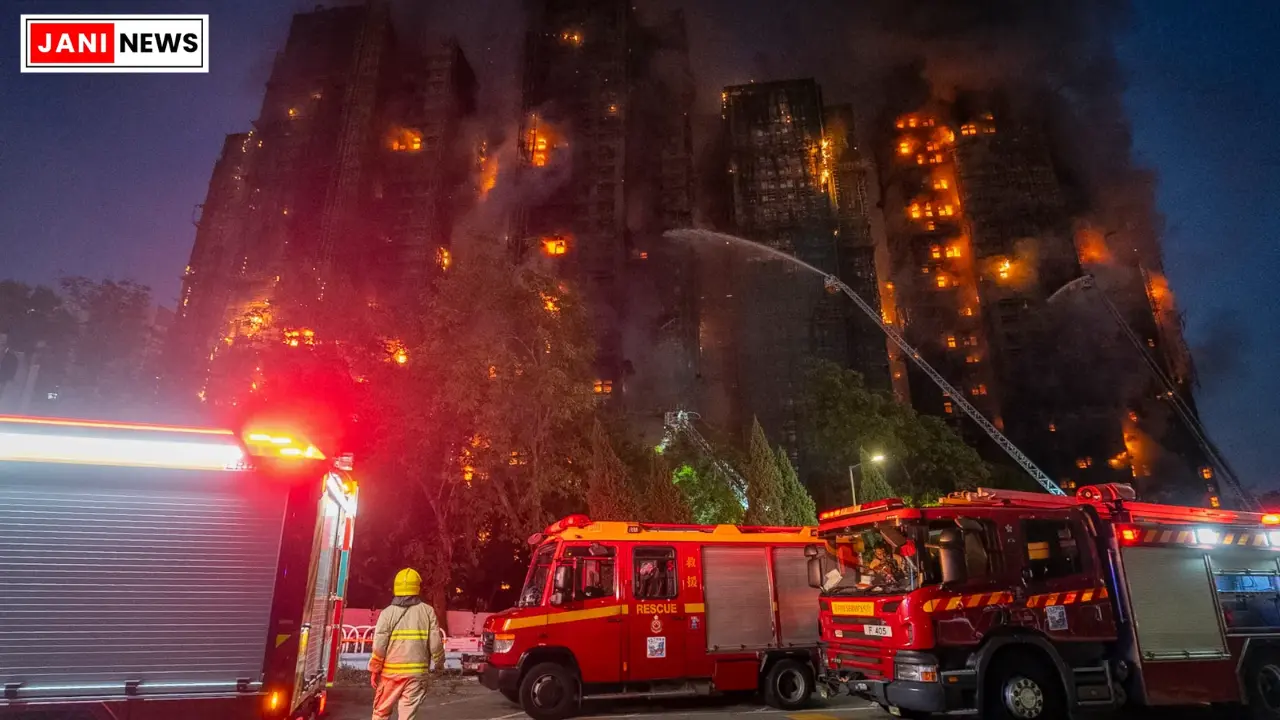
Imagine waking up to the smell of smoke seeping through your walls, the crackle of flames just outside your window—or worse, the desperate cries of neighbors you’ve known for decades. That’s the nightmare unfolding right now in Hong Kong’s bustling Tai Po district, where a ferocious fire tore through a sprawling residential complex, claiming lives and shattering families. As of this morning, November 27, 2025, the Hong Kong buildings fire death toll stands at a staggering 44, with nearly 300 people still missing amid the rubble and ash. It’s the deadliest blaze the city has seen in nearly eight decades, leaving us all to wonder: how did something so catastrophic happen in one of the world’s safest urban hubs?
I’ve covered my share of tragedies over the years, from wildfires scorching California hillsides to high-rise horrors in other global cities, but this one hits different. Hong Kong’s dense skyline, packed with dreams and daily routines, feels so vulnerable in moments like these. Let’s break down what we know so far—and what it means for the thousands affected.
The Fire’s Furious Spread: From Spark to Catastrophe
It started innocently enough, or so it seemed. Around 2:45 p.m. yesterday, a sharp bang echoed through the Wang Fuk Court estate—a modest, government-subsidized haven built back in 1983 for over 4,600 residents across 2,000 apartments in eight towering blocks. What followed was chaos: flames erupted in one building, racing upward like a living beast, fueled by the very scaffolds meant to protect during ongoing renovations.
By evening, the inferno had leaped to seven of the eight blocks, devouring bamboo scaffolding and green protective mesh that wrapped the structures like a deadly cocoon. Firefighters, battling what officials called an “unusual” rapid spread, upgraded the alarm from a routine No. 1 to the maximum No. 5 in under four hours. Thick black smoke choked the sky, visible for miles, while sections of burning scaffolding rained down like fiery meteors.
Here’s a quick timeline of the horror:
- 2:51 p.m.: Initial reports of smoke and trapped residents in the originating block.
- 3:34 p.m.: Alarm escalates to No. 4 as flames jump via scaffolding.
- 6:22 p.m.: Full No. 5 alert; hundreds evacuate amid screams and sirens.
- Overnight into Thursday: Four blocks contained after 10 grueling hours, but three still smolder fiercely.
Eyewitnesses like 66-year-old Harry Cheung, a Block Two veteran of 40 years, described the moment: “I heard this deafening crack, then saw the fire blooming next door. Grabbed my bag and ran—didn’t even look back.” His story echoes dozens more, painting a picture of sheer panic in a place folks called home.
Arrests and Alarms: Pinpointing the Blame in Hong Kong’s Fire Tragedy
You can’t help but ask—could this have been prevented? Authorities aren’t wasting time. Early this morning, police slapped manslaughter charges on three key figures from the construction firm handling the HK$330 million ($42.4 million) revamp: two directors and an engineering consultant. Superintendent Eileen Chung didn’t mince words: “Gross negligence let this fire run wild, turning a routine job into unthinkable loss.”
Investigators zeroed in on suspect materials—foam sealing windows in one unaffected block, plus that ubiquitous green mesh and bamboo poles. Hong Kong’s been phasing out bamboo scaffolding since March, after 22 worker deaths from 2019 to 2024, but fire risks? They’ve sparked at least three blazes this year alone, per the Association for the Rights of Industrial Accident Victims. It’s a stark reminder of how tradition clashes with modern safety in a city squeezing every square foot for survival.
And the human cost? Gut-wrenching. Among the 44 confirmed dead is a brave firefighter, one of over 200 responders on site. Another 45 survivors cling to life in hospitals, battling severe burns and smoke inhalation. Some 279 loved ones remain unaccounted for—phones silent, doors unopened—while 900 huddle in eight temporary shelters, staring at the glowing horizon where their lives once stood.
President Xi Jinping weighed in late last night, urging “all-out efforts” to douse the flames and heal the wounds, via state media CCTV. Locally, Chief Executive John Lee called it a “massive catastrophe,” vowing a full probe—criminal and otherwise. He’s even mulling a delay to the December 7 legislative elections, with campaigning already paused.
Echoes of Grenfell: Why This Hong Kong Fire Feels Eerily Familiar
If you’ve followed global fire stories, this might stir memories of London’s Grenfell Tower in 2017—72 lives lost to flammable cladding on a renovated high-rise, exposing regulatory blind spots. Here in Hong Kong, the parallels chill: cost-cutting corners during upgrades, materials that ignite like tinder, and a dense population stacked sky-high. Back then, it took years for accountability; let’s hope Hong Kong moves faster.
Stats paint the peril. Hong Kong’s public housing, home to half its 7.5 million residents, often dates to the ’70s and ’80s—like Wang Fuk Court. Renovations are routine, but with sky-high property prices fueling resentment, skimping on safety feels all too common. Social media’s ablaze (pun unintended) with clips of workers smoking atop scaffolds, hashtags like #HongKongFireNegligence trending as families demand answers.
Take 71-year-old Mr. Wong, tears streaming as he clutches a photo of his wife, last seen waving from an upper-floor window. Or 70-year-old Ms. Chu, who crashed at a friend’s after fleeing, only to return and find her block a skeleton. “We built lives here,” she told reporters, voice cracking. “Now? We’ve got nothing but questions.”
Ripple Effects: From Closed Roads to Shattered Routines
The blaze’s shadow stretches far. Tai Po’s roads are gridlocked, 39 bus lines rerouted, and six schools shuttered today—kids glued to news feeds instead of desks. Traffic snarls could linger, the Transport Department warns, as crews haul away debris.
For the estate’s survivors, it’s a limbo of loss. Each unit chipped in HK$160,000–180,000 for the facelift—money now ashes. This isn’t just bricks and mortar; it’s community, memories, futures up in smoke.
As someone who’s seen cities rebuild from the brink, I’ll say this: Hong Kong’s resilient. But resilience demands reckoning. Officials promise support—counseling, temporary housing, financial aid—but words ring hollow without real change. Phasing out risky scaffolds? Enforcing foam-free standards? It’s time.
What’s next for these families, and for a city forever changed? We’re tracking every update, from rescue breakthroughs to probe revelations. If you’re in Hong Kong or know someone affected, reach out to the Fire Services Department hotline at 2723 8787 for info. And hey, in tough times like these, a little solidarity goes a long way—share your thoughts below, or donate to verified relief funds. Together, we’ll watch this story unfold, pushing for the justice it deserves.
Reporting draws from on-scene accounts and official statements as of November 27, 2025. For live developments, check back here or follow trusted local outlets.