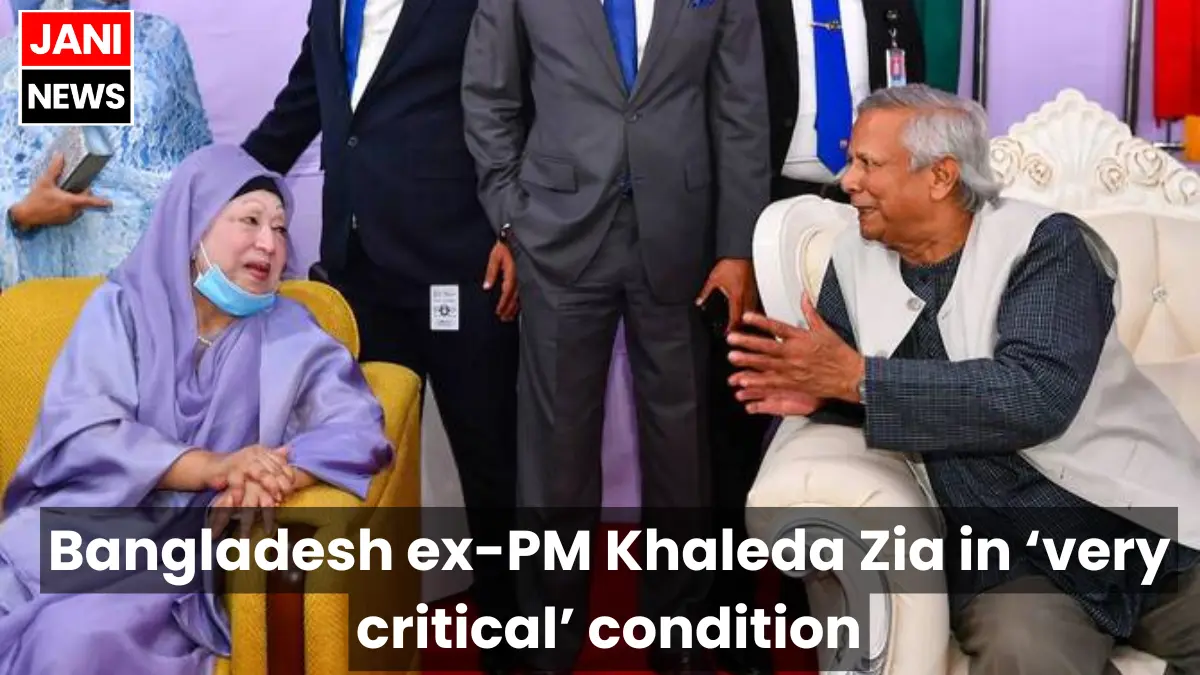
In the sweltering heart of Dhaka, where politics has long been a high-stakes game of thrones, a somber update has gripped the nation. Former Prime Minister Khaleda Zia—Bangladesh’s enduring symbol of opposition grit—is clinging to life in “very critical” condition. At 80 years old, the woman who once steered the country through economic booms and bitter rivalries now lies vulnerable in a military hospital, her frail body a stark reminder of the human cost behind decades of power struggles.
It’s the kind of news that hits like a monsoon downpour—sudden, relentless, and impossible to ignore. Zia, leader of the Bangladesh Nationalist Party (BNP), has battled health woes for years, but this latest report from her family paints a picture far grimmer than before. Chronic illnesses, including liver cirrhosis, arthritis, and diabetes, have piled up like unpaid debts. Just last month, she was rushed to the Combined Military Hospital (CMH) after her condition nosedived, and now, doctors are scrambling to stabilize her.
What makes this twist especially heartbreaking? Zia’s not just any patient; she’s been under house arrest since 2018, convicted in absentia on corruption charges that her supporters—and even some international watchdogs—call politically motivated. Picture this: the architect of Bangladesh’s democratic push in the ’90s, confined to a single room, her world shrunk to four walls while the country she helped shape marches on without her voice.
A Lifetime of Battles: From Triumph to Turmoil
Let’s rewind a bit, shall we? Khaleda Zia wasn’t born into the spotlight; she stepped into it after tragedy thrust her forward. In 1981, her husband, Ziaur Rahman—the nation’s founding president—was assassinated in a coup. Overnight, she transformed from grieving widow to fierce political force, rallying the BNP against military rule. By 1991, she’d clinched victory in the country’s first free election in 16 years, becoming Bangladesh’s first female prime minister.
Those were heady days. Under her watch, GDP growth averaged a robust 5% annually (World Bank data from the era), infrastructure bloomed, and women’s rights took tentative steps forward. But politics in Bangladesh is rarely a straight path—it’s more like navigating the Padma River during flood season, full of deceptive calms and sudden surges.
Rivalries with Sheikh Hasina’s Awami League turned venomous. Elections marred by violence, allegations of rigging, and a revolving door of imprisonments defined the 2000s. Zia served two terms but faced boycott calls and protests that eroded her grip. Fast-forward to 2018: slapped with a five-year sentence for embezzling orphanage funds—a case her allies decry as a sham—and she’s been sidelined ever since. Human Rights Watch has repeatedly flagged these trials as “flawed,” echoing concerns from Amnesty International about judicial independence in the region.
The Medical Maze: What’s Ailing the Ex-PM?
Zia’s health file reads like a veteran’s war diary—layer upon layer of setbacks. Diagnosed with primary non-Hodgkin’s lymphoma back in 2017, she underwent treatment in India before restrictions tightened. Add in heart issues that required stents, a thyroid tumor, and the relentless grind of rheumatoid arthritis, and it’s no wonder her body’s waving a white flag.
- Liver Cirrhosis: The big one right now, scarring from long-term damage that’s left her jaundiced and weak.
- Diabetes and Hypertension: Daily battles with insulin shots and blood pressure meds, complicated by her age.
- Respiratory Woes: Pneumonia episodes that flare up like old grudges, landing her in ICU more than once.
Family sources, speaking anonymously to avoid reprisals, say she’s lost significant weight and struggles with basic mobility. “She’s fading before our eyes,” one relative told reporters this week. BNP leaders are pleading for her release on humanitarian grounds—let her seek world-class care abroad, they argue. After all, Hasina’s government granted her temporary medical bail in 2020, only to revoke it amid escalating protests.
Think about it: In a nation of 170 million, where healthcare access is a luxury for many, Zia’s plight underscores a deeper irony. The same streets she once marched to champion the poor now buzz with student-led uprisings against the very regime that holds her captive. Last summer’s quota protests, which toppled Hasina’s successor in a dramatic ouster, have reignited demands for Zia’s freedom. Could this be the tipping point?
Echoes of Empathy: Global Eyes on Dhaka
The international community isn’t staying silent. The U.S. State Department issued a measured statement yesterday, urging “compassionate consideration” for Zia’s health while reiterating calls for democratic reforms. “Bangladesh stands at a crossroads,” it read, a nod to the fragile interim government piecing together post-Hasina stability.
Closer to home, India—long a wary neighbor—has its own stake. Zia’s pro-Pakistan leanings clashed with New Delhi’s interests during her tenure, but even they’ve extended quiet well-wishes through backchannels. And the UN? Special Rapporteur Mary Lawlor tweeted support, highlighting how “political prisoners’ health crises expose systemic failures in justice.”
| Key Health Milestones for Khaleda Zia | Details |
|---|---|
| 2017 | Diagnosed with lymphoma; treated in Singapore. |
| 2018 | House arrest begins after graft conviction. |
| 2020 | Brief medical parole amid COVID fears. |
| 2023 | Heart surgery at CMH; family alleges neglect. |
| Nov 2025 | “Very critical” status confirmed; ICU admission. |
Stats like these aren’t just numbers—they’re a timeline of resilience tested to its limits. Bangladesh’s opposition ranks have swelled in her absence, with BNP youth wings organizing virtual vigils that draw thousands. One young activist summed it up on social media: “Khaleda Apa isn’t just our leader; she’s the heartbeat of our fight.”
A Nation on the Brink: What’s Next for Bangladesh?
As Zia’s monitors beep in that sterile hospital room, Bangladesh grapples with its own fever. The interim administration, led by Nobel laureate Muhammad Yunus, promises elections by mid-2026, but trust is thin. Inflation hovers at 9.5% (per Bangladesh Bureau of Statistics), garment workers strike for fair wages, and climate refugees from the Sundarbans add to the strain.
Releasing Zia could be a masterstroke—a gesture toward reconciliation in a polarized land. Or it might unleash floods of old feuds. Either way, her story reminds us that behind every headline is a person, fragile and fierce in equal measure.
If you’re following South Asia’s pulse, keep an eye on Dhaka. Want to dive deeper into BNP’s playbook or Hasina’s exile saga? Drop a comment below—we’re all in this conversation together. And if Zia’s tale moves you, consider supporting groups like the International Committee of the Red Cross, which aids political detainees worldwide. Your voice, like hers once was, matters.