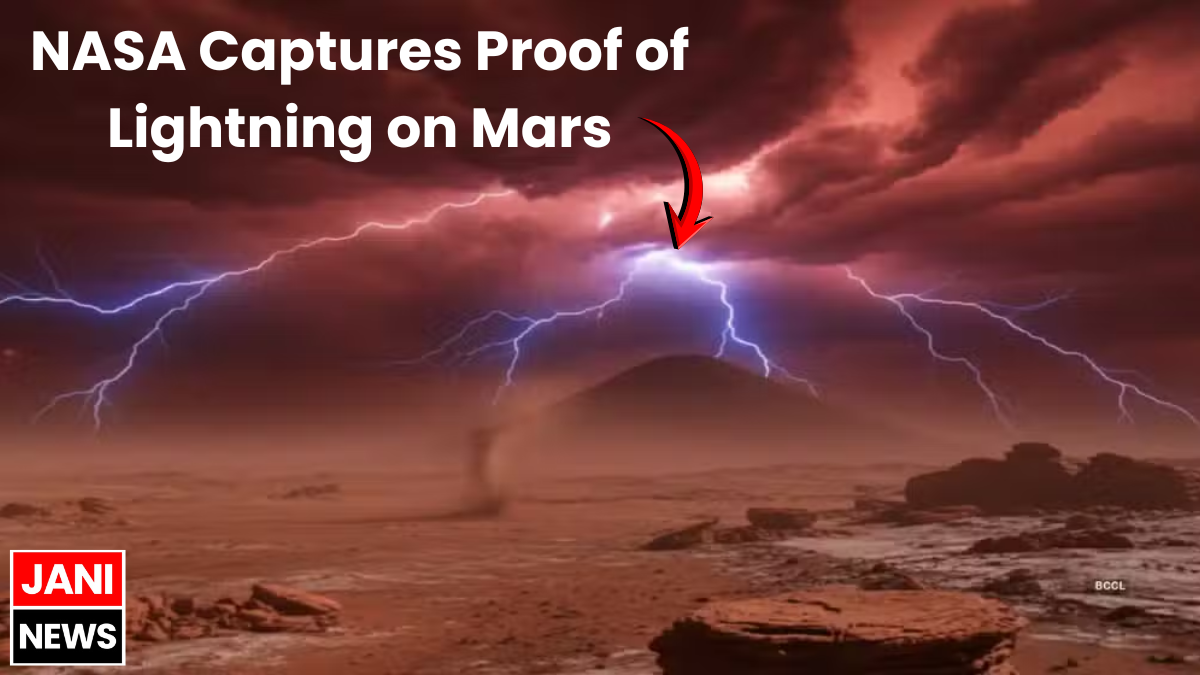
Imagine cruising across the rusty dunes of Mars in a rover that’s tougher than a tank, only to stumble upon the faint crackle of electricity in the air. That’s exactly what happened with NASA’s Perseverance rover – and it’s got scientists buzzing like never before. For the first time, we’ve got solid proof of lightning on the Red Planet, captured not by some fancy lightning rod, but by a humble microphone meant for rock analysis. This isn’t just a cool space fact; it’s a window into Mars’ wild weather secrets, and it could reshape how we think about landing humans there someday.
Dust storms rage across Mars like nothing on Earth, whipping up particles that rub together and build static charge. Those tiny sparks? They’re the lightning we’re talking about – not the dramatic forks that light up our summer skies, but subtle zaps, like the shock you get from a wool sweater on a dry winter day. Published in a fresh study in Nature, this discovery confirms what planetary experts have suspected for decades: Mars isn’t as dead-quiet as it looks.
How Perseverance Accidentally Snagged the Evidence
Perseverance has been roving Jezero Crater since touching down in 2021, hunting for signs of ancient life and snapping selfies with its drill arm. But here’s the serendipitous part – its SuperCam instrument, which blasts rocks with lasers to study their chemistry, comes equipped with a microphone. During one of those brutal dust storms in 2022, that mic picked up eerie “pops” and “zaps” amid the wind’s howl.
These weren’t random noises. Researchers analyzed the recordings and pinpointed them as electrical discharges – minuscule arcs just millimeters long, triggered when dust grains collide and shed electrons. On Earth, you’d need massive clouds for lightning; Mars’ super-thin atmosphere (less than 1% of ours) lets even the tiniest charge buildup spark a release. It’s like comparing a bonfire to a matchstick flicker, but those matchsticks are popping off constantly across the planet.
Baptiste Chide, the lead researcher from France’s CNRS and a key player on the Perseverance team, couldn’t hide his excitement. “Although low in energy, these zaps are happening constantly and all over the planet,” he told reporters. Think about it: While we’re debating climate models back home, Mars is quietly electrocuting itself in slow motion.
Why This Martian Lightning Matters More Than You Think
Dust doesn’t just make Mars look like a giant sandbox – it’s the engine of its weather. These storms can engulf the whole planet seasonally, lofting particles high into the atmosphere and stirring up global temp swings. Lightning on Mars? It adds a charged twist, potentially zapping apart complex molecules on the surface. That could explain one of the biggest head-scratchers: Why does methane – a potential biosignature gas – vanish so quickly from the air?
Lab tests have mimicked this for years, rubbing Martian-like dust to spark mini-bolts. But real-world proof? Elusive until now. Back in 2016, Europe’s Schiaparelli lander packed gear to hunt these discharges, only to crash spectacularly on landing. Perseverance’s lucky eavesdrop finally seals the deal, as Daniel Michalik, a lightning whiz at Cardiff University (who wasn’t on the team), put it: “This provides convincing evidence of dust-generated electrical discharges.”
Quick Breakdown: Mars Lightning vs. Earth’s Thunderbolts
To wrap your head around the scale, here’s a simple side-by-side:
| Aspect | Mars Lightning | Earth Lightning |
|---|---|---|
| Size | Millimeters to centimeters long | Kilometers long, branching wildly |
| Energy | Tiny – like a static shock | Massive – powers thunderstorms |
| Trigger | Dust particle friction in thin air | Water droplets and ice in thick clouds |
| Frequency | Constant during storms, planet-wide | Seasonal, localized events |
| Impact | Breaks down surface organics | Starts wildfires, charges atmosphere |
No wonder Mars feels otherworldly – its “storms” are more like eternal sandblasters with a side of sparks.
What It Means for Future Mars Explorers (And Their Suits)
As we eye crewed missions – NASA’s Artemis program is just the warmup – these findings aren’t trivia. Those persistent zaps could nibble at electronics or erode spacesuit fabrics over time. Chide warns: “In the long term, there may be a risk that astronaut suits could be damaged by these discharges. This is something we will have to investigate as we plan for humans on Mars.”
It’s a reminder that the Red Planet’s not a forgiving playground. Dust devils already gum up solar panels (remember Opportunity’s quiet end?), and now we’ve got proof of an invisible zap hazard. On the flip side, this boosts our models for Martian climate – dust storms drive weather there like rain does here, so understanding the electricity could predict safe landing windows or storm dodges.
We’ve come a long way from grainy telescope views to microphones catching cosmic static. If you’re as hooked on space oddities as I am, dive deeper into NASA’s Perseverance updates or snag a copy of that Nature paper for the nitty-gritty. What’s your take – does this make Mars missions more thrilling or just plain riskier? Drop a comment below, and let’s chat about the next big Red Planet reveal.