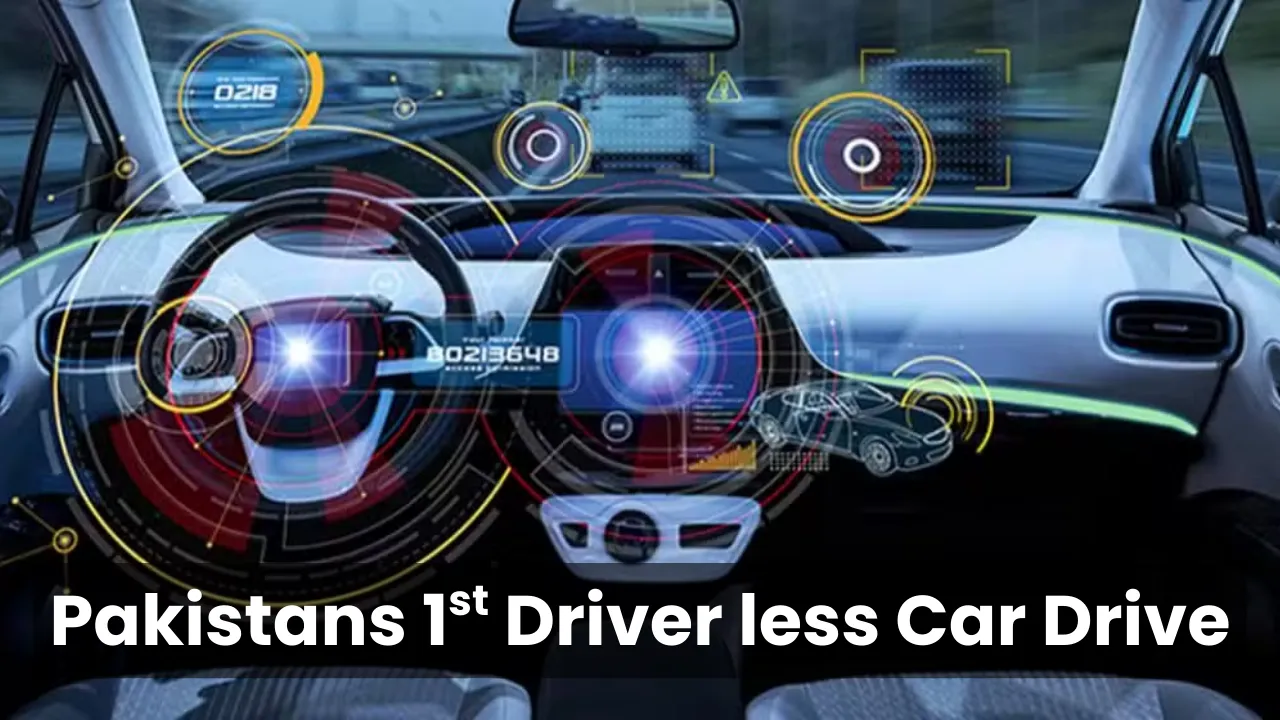
In a quiet corner of Karachi, something remarkable just rolled down the university lanes—Pakistan’s inaugural AI-driven autonomous vehicle, humming along without a human at the wheel. This isn’t some distant dream from Silicon Valley; it’s a homegrown triumph from NED University of Engineering and Technology, where engineers turned heads with a flawless trial run. As the nation grapples with congested streets and tech ambitions, this self-driving car breakthrough signals real progress in Pakistan’s push toward smarter mobility.
The Spark Behind the Wheel
Picture a team of dedicated minds at the National Centre for Artificial Intelligence, toiling away for a full year to birth this innovation. They started with a straightforward electric vehicle imported from China—nothing fancy, just a blank canvas. Then, layer by layer, they wove in cutting-edge elements: artificial intelligence algorithms that think on their feet, robotic controls for precision maneuvers, detailed mapping software to chart every twist, and a suite of high-tech sensors plus computer vision to “see” the world around it.
Dr. Muhammad Khurram, the centre’s director and the project’s driving force, couldn’t hide his pride. After months of tweaks and late nights, the car has hit a solid milestone in testing. “We’ve nailed the basics,” he shared, his voice carrying that mix of exhaustion and exhilaration you hear from folks who’ve poured their souls into something big.
What Makes This Car Tick
At its core, this isn’t a gimmick—it’s engineered for the real world. The steering system relies on radar and sharp-eyed computer vision to keep things steady, dodging surprises with ease. Right now, the team’s laser-focused on ramping up smarts: spotting obstacles in the nick of time, tracing lane lines through dust and glare, reading speed limits on weathered signs, and decoding traffic lights that flicker more than they should.
Cruising at a cautious 15 to 20 kilometers per hour, it already handles turns solo, sizing up traffic from all sides like a seasoned cabbie. And get this—it’s built to shrug off the chaos of local drives. Team engineer Inzamam Khan pointed out how those top-notch sensors pick up on every bump and crater, letting the car glide over potholes that would rattle most rides. In a country where roads tell stories of resilience, that’s no small feat.
Navigating Pakistan’s Tricky Terrain
Pakistan’s streets are a patchwork of triumphs and trials—vibrant markets spilling onto boulevards, rickshaws weaving like threads in a loom, and surfaces that shift from smooth asphalt to gravelly surprises. Yet this vehicle thrives amid it all, thanks to its robust setup. It’s not just about speed; it’s about reliability in the unpredictable.
Early days of the project trace back to Dr. Saroosh Hashmat Lodhi’s time as vice chancellor, when the seeds were planted. Under the current leadership of Dr. Tufail Ahmed, it’s blossomed into this tangible win. Students and staff gathered, phones out, capturing the moment a machine took the reins— a quiet revolution unfolding right there on campus.
Why This Matters for Pakistan’s Future
This test isn’t isolated; it’s a cornerstone in elevating the nation’s engineering prowess and AI landscape. Globally, the autonomous vehicle sector is exploding—from roughly $70 billion last year to a projected $214 billion by 2030, per Grand View Research. For Pakistan, where roads claim over 28,000 lives each year according to WHO estimates, tech like this could slash accidents, ease urban gridlock, and spark jobs in a budding industry. It’s proof that with grit and ingenuity, we’re not just keeping up—we’re carving our own path.
As these wheels keep turning, expect more milestones. For the freshest scoops on tech and auto vibes, follow us on Facebook and WhatsApp—join the conversation and stay ahead of the curve.