Saudi Arabia has directly warned Iran to stop attacking the kingdom and its energy infrastructure, threatening retaliation if the strikes continue, according to sources familiar with the communications.
This message was delivered through diplomatic channels, including a clear conversation between Saudi Foreign Minister Prince Faisal bin Farhan and his Iranian counterpart Abbas Araqchi two days before Iranian President Masoud Pezeshkian’s public speech on Saturday (March 7 or 8, 2026, based on timing).
Key points from Saudi Arabia’s position:
- Riyadh prefers a diplomatic solution and de-escalation in the ongoing conflict between Iran, the US, and Israel.
- Saudi Arabia (and other Gulf states) has not allowed the US to use their airspace, territory, or waters to launch attacks on Iran.
- However, if Iran keeps targeting Saudi territory—especially critical energy facilities—Riyadh would have no choice but to let US forces use bases in the kingdom for military operations against Iran.
- Saudi Arabia would directly retaliate to defend itself.
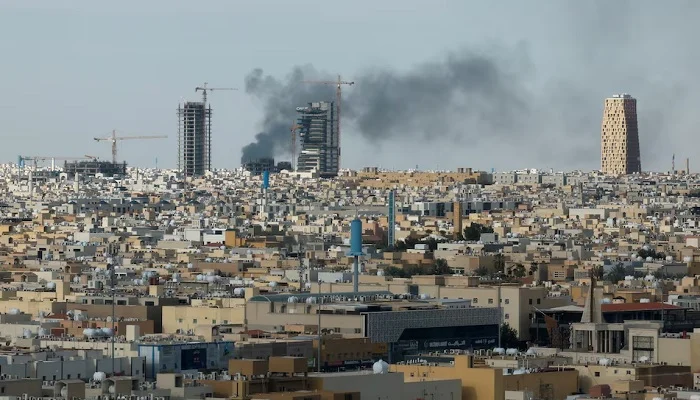
These warnings come amid an escalating regional war that began on February 28, 2026, after the collapse of nuclear talks with Iran. A joint US-Israeli military campaign started that day, resulting in the killing of Iran’s Supreme Leader Ayatollah Ali Khamenei in strikes on Tehran. Iran retaliated with drone and missile attacks on Israel and several Gulf states hosting US military bases or assets, including Saudi Arabia, the UAE, Kuwait, Qatar, and Bahrain. Some strikes hit civilian areas or energy sites, heightening tensions.
Saudi Arabia has kept open back-channel contact with Iran via its ambassador in Tehran since the war’s start, emphasizing neutrality in the US-Israel operations.
In response to the warnings and regional backlash, President Pezeshkian apologized in a televised address to neighboring Gulf countries for the harm caused by Iran’s actions. He stated that Iran’s temporary leadership council had approved suspending attacks on nearby states—unless those countries are used to launch attacks on Iran. This appeared to be an effort to calm Gulf anger and prevent further escalation.
However, the apology’s impact remains uncertain:
- Reports of additional strikes on Gulf states continued even after the speech.
- Iran’s military command (Khatam al-Anbiya Headquarters) issued a statement affirming respect for neighboring states’ sovereignty but declaring US and Israeli bases/assets across the region as primary targets for “powerful and heavy” strikes.
- This highlights potential internal divisions in Iran’s leadership, with some hardliners pushing to continue attacks, viewing Gulf-hosted US facilities as legitimate targets.
Iranian sources confirmed the Saudi warning call and reiterated that their strikes target US/Israeli interests, not the Gulf countries themselves. In talks, Tehran demanded the closure of US bases in the region and an end to intelligence-sharing by some Gulf states that Iran believes aids attacks against it.
Broader context and insights:
Recent years saw Saudi Arabia and Iran improve relations through diplomacy, reducing longstanding rivalry. The current war has shattered that progress, with Iran’s Revolutionary Guards launching widespread drone/missile barrages against Gulf targets.
US President Donald Trump commented on social media, claiming Iran had “apologized and surrendered” to its neighbors due to intense US-Israeli pressure—though ongoing strikes and military statements suggest no full de-escalation.
The situation remains volatile, with risks of wider involvement if attacks on energy infrastructure persist, potentially disrupting global oil supplies and drawing in more actors. Saudi Arabia’s stance balances a desire for peace with firm self-defense, signaling it won’t remain passive if directly threatened.