

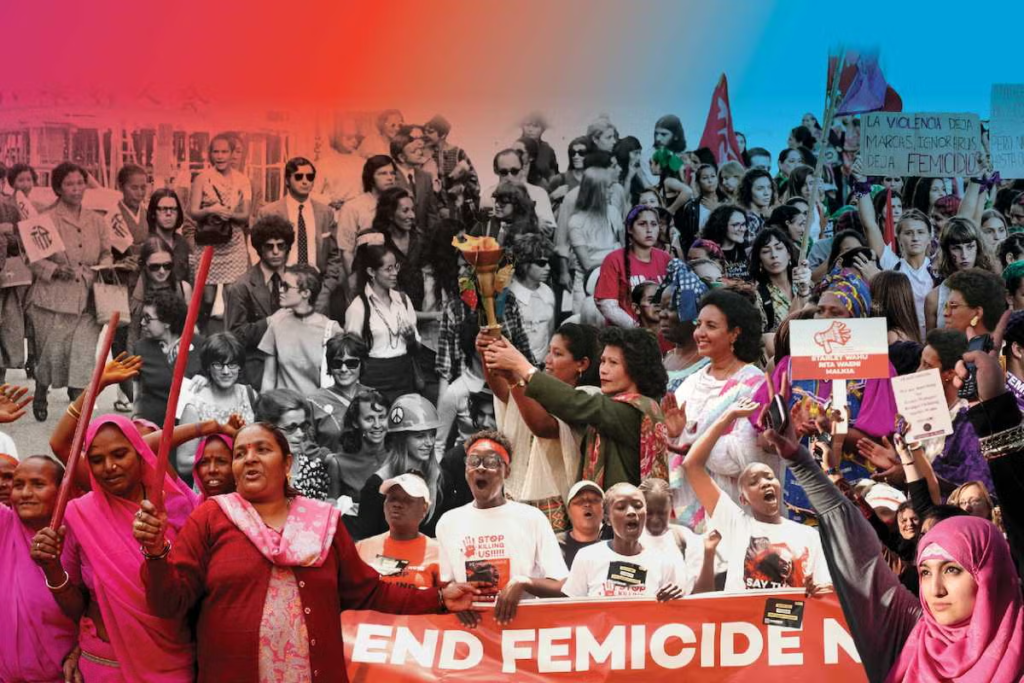
March 8, 2026, marked the 115th anniversary of International Women’s Day, and women across the globe turned out in force to press for real change. From packed avenues in Madrid and Barcelona to the boulevards of Paris and beyond, demonstrators waved purple flags, chanted for equal pay and bodily autonomy, and called for an immediate end to gender-based violence. The day blended celebration with fierce protest, as participants also raised their voices against war and rising authoritarianism.
In Spain, the heart of many of the day’s biggest mobilizations, feminist collectives organized major marches in the capital and Catalonia. Organizers with Madrid’s Comisión 8M estimated a crowd of around 160,000 people filling the streets, though authorities put the figure closer to 24,000. In Barcelona, police reported more than 23,000 women marching under the banner “Ni un paso atrás. Lucha transfeminista ante el imperialismo colonial y fascista” (“Not one step back. Transfeminist struggle against colonial and fascist imperialism”). Protesters carried signs condemning violence at home and abroad, with many explicitly linking the fight for women’s rights to opposition against conflict in the Middle East. “We condemn all violence, here and anywhere in the world,” became a recurring message, echoing the strong anti-war tone that dominated the Madrid march.
Across Europe, similar scenes unfolded. In Paris, tens of thousands marched through the city center, organized by unions, feminist groups, and left-wing parties. Their focus was not only on domestic issues like equal pay and reproductive rights but also on solidarity with women facing repression in places like Iran and Afghanistan. In Italy, Greece, Ukraine, Germany, Turkey, and the United Kingdom, women rallied for the same core demands: full legal equality, access to education and justice, and an end to femicide and sexual violence.
Read About: Jennefir Runyon Death Webstory:-Jennefir Runyon Death
The global picture was equally striking. In Southeast Asia, thousands turned out in Cambodia, the Philippines, and Indonesia to defend hard-won gender policies. In Latin America and the Caribbean—regions where the Pan American Health Organization reports that one in three women has experienced physical or sexual violence at least once—marches highlighted the deadly cost of inaction. Even in Pyongyang, North Korea, state-organized events showed women dancing in the streets, while in Istanbul protesters chanted and held banners high.
One powerful symbol of the day was French survivor Gisèle Pelicot, whose courage in a high-profile rape case has made her an international feminist icon. Pelicot waived her right to anonymity and insisted on a public trial, declaring, “La vergüenza tiene que cambiar de bando” (“Shame must change sides”). Her story resonated deeply with marchers everywhere, underscoring how violence against women remains a universal fight.
Behind the chants and colorful scarves lies a sobering reality. According to United Nations data cited in coverage of the day, women worldwide still enjoy only 64% of the legal rights granted to men. They hold just 27.2% of parliamentary seats, 35.5% of local government positions, and 30% of managerial roles. The rollback of abortion rights in the United States after the 2022 Supreme Court decision continues to fuel fears of similar regressions elsewhere, especially as nationalist and far-right movements gain ground.
Read About: Jennefir Runyon Death Webstory:-Jennefir Runyon Death
The day’s origins trace back more than a century—to a 1909 proposal by the U.S. Socialist Party, Clara Zetkin’s 1910 call in Copenhagen, and the first coordinated events in 1911. It gained new meaning during World War I when women used the date to demand “Bread and Peace,” and the United Nations has officially recognized March 8 since 1977.
On this 8M, the message was clear: progress is real, but fragile. From the streets of Madrid to the squares of Paris and beyond, women made one thing unmistakable—they are not stepping back. The fight for equality, safety, and reproductive freedom continues, louder and more united than ever.

día internacional de la mujer historia,
día internacional de la mujer 2026,
feliz día de la mujer,
8 de marzo día de la mujer,
día internacional de la mujer 2026 onu,
por que se celebra el día internacional de la mujer,
día internacional de la mujer resumen,
día de la mujer boliviana,
holi,
Akira Toriyama,