


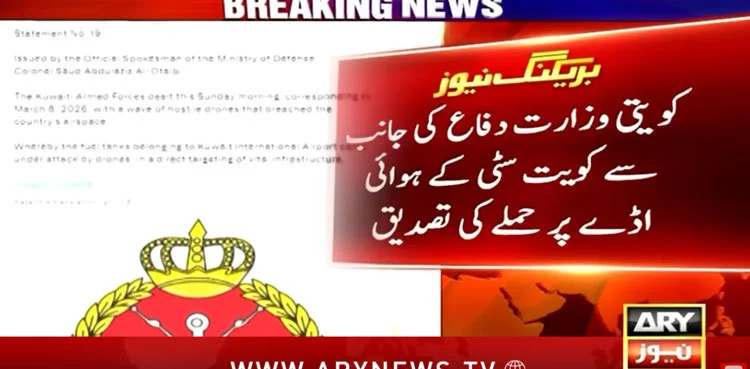
On March 8, 2026, amid escalating regional tensions involving Iran and several Gulf countries, Kuwait reported a drone attack targeting fuel storage tanks at Kuwait International Airport.
Kuwait’s Defense Ministry spokesperson, Col. Saud Abdulaziz Al-Atwan, stated that the armed forces successfully responded to a wave of hostile drones that breached the country’s airspace at dawn. The military described the strike on the airport’s fuel tanks as a direct attack on vital infrastructure. Kuwait’s national oil company also announced a precautionary reduction in crude oil production as a safety measure.
While air defenses intercepted many of the drones, some civilian facilities suffered material damage from falling fragments and debris during the interception efforts. Reports indicate that two fuel depots (operated by the Kuwait Aviation Fueling Company, or KAFCO) were hit, sparking a large fire early March 2026, apparently in retaliation for ongoing military actions involving the US and Israel.
In a related development, Qatar’s Defense Ministry reported that on the previous day (Saturday), the country was targeted by 10 ballistic missiles and 2 cruise missiles launched from Iran. Air defenses intercepted six ballistic missiles and both cruise missiles, while two ballistic missiles fell in territorial waters and two landed in uninhabited areas, resulting in no casualties.
Saudi Arabia’s Defense Ministry announced that it intercepted and destroyed 15 drones entering its airspace, including an attempted strike on the diplomatic quarter in the capital, Riyadh. No casualties or significant damage were reported from these interceptions.
These attacks occurred despite an apparent apology from Iran’s president to Gulf countries, stating that strikes would cease unless launched from their territories. However, Iran’s judiciary chief contradicted this shortly afterward, declaring that operations would continue against sites in Gulf countries deemed to be “at the disposal of the enemy.”
This series of incidents highlights the heightened risk to critical infrastructure in the Gulf, the effectiveness of regional air defense systems in mitigating threats, and the potential for further escalation in an already volatile situation.