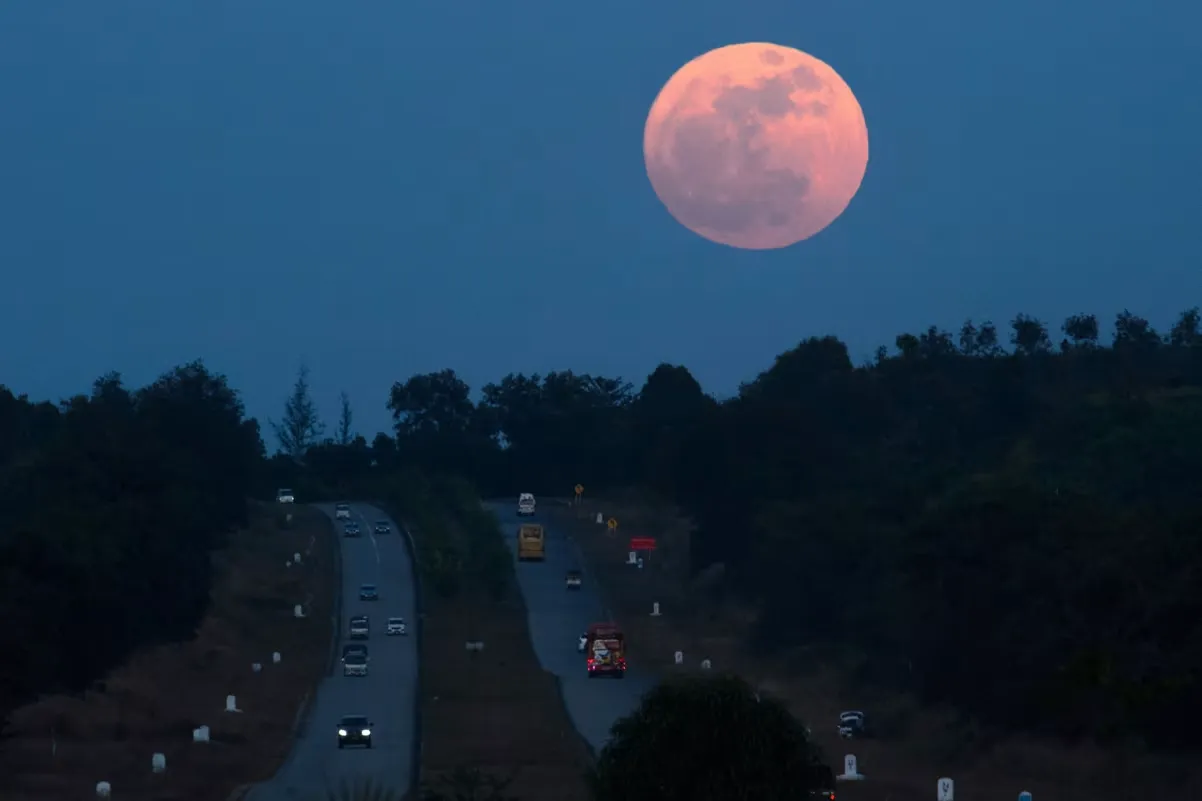
As the chill of December settles in, the night sky has one final gift before the year wraps up—a breathtaking supermoon that’ll light up the darkness like a giant lantern. This December 2025 supermoon, often called the Cold Moon, hits its peak on Thursday evening, making it the perfect excuse to bundle up and step outside. If you’ve been chasing these lunar events all year, this one’s your grand finale, wrapping up a rare streak of three back-to-back supermoons. Trust me, it’s worth the frosty fingers.
Supermoons like this one aren’t just pretty—they’re a reminder of how our cosmic neighbor dances in its quirky orbit around Earth. Let’s break it down so you can make the most of it.
What Exactly Is a Supermoon, Anyway?
Think of the moon’s path as an off-kilter racetrack, not a perfect circle. At its closest point to us—called perigee—it swings in extra tight, about 226,000 miles away instead of the usual 239,000. When that lines up with a full moon, boom: supermoon.
This setup amps up the drama. The moon can look up to 14% bigger across and 30% brighter than at its farthest, though you’ll mostly notice that glow against the winter black. According to NASA, these events happen three or four times a year, but stringing three together like we’ve had in late 2025? That’s a treat—October’s Hunter’s Moon kicked it off, November’s Beaver Moon kept the momentum, and now the Cold Moon seals the deal.
Fun fact: This one’s the second-closest full moon of the year, trailing just behind November’s. It might even nudge tides a tad higher, but don’t sweat it—the effect’s subtle unless you’re a coastal surfer.
Why “Cold Moon”? The Stories Behind the Name
Full moons have worn colorful nicknames for centuries, drawn from Native American, European, and colonial lore. December’s earns “Cold Moon” from the Mohawk tribe, nodding to those bone-chilling nights as winter digs in. It’s the full moon nearest the winter solstice on December 21, when days hit their shortest in the Northern Hemisphere.
But that’s not the only tag it carries—folks have layered on more over time:
- Long Night Moon (Mohican): Captures those endless dark hours stretching toward the solstice.
- Winter Maker Moon (Western Abenaki): Like nature flipping the switch to full-on frosty mode.
- Snow Moon (Cherokee and Haida): A heads-up for the flurries that often follow.
- Frost Exploding Trees Moon (Cree): Evokes the crack of ice in freezing bark—poetic, right?
- Moon of the Popping Trees (Oglala): Same vibe, highlighting winter’s sharp sounds.
These names aren’t just cute; they tie us to seasons and survival stories from long ago. In Pagan circles, it sometimes doubles as the Mourning Moon, a time for reflection before the solstice reset.
When and Where to Spot the December 2025 Supermoon
Mark your calendar: The Cold Moon reaches full illumination at 6:14 p.m. ET on December 4, 2025—right around sunset for many spots. It’ll look plenty full the nights before and after, so you’ve got a window from Wednesday through Friday.
Visibility peaks as it rises in the east just after dusk. In the U.S., expect it low on the horizon by 5-7 p.m. local time, climbing high by midnight for that classic winter arc. Head further north, like the UK, and it’ll pop up around 2:30 p.m. GMT on the 4th, lingering till dawn.
Clear skies are key, especially with December’s clouds lurking. Check apps like Stellarium or The Old Farmer’s Almanac for your exact moonrise time—small tweaks based on location make a big difference.
Pro Tips for the Best View—And Why Horizon Magic Matters
You don’t need fancy gear for this; your eyes (and maybe a thermos of hot cocoa) will do just fine. But to really wow yourself, time it right. Here’s how to dial in the experience:
- Chase the rise: Hit an open spot with an unobstructed eastern view right after sunset. The moon’ll seem huge hugging the landscape—thanks to the moon illusion, a brain trick that makes low objects look oversized. Astronomer William Alston from the University of Hertfordshire calls it “slightly more striking” during a supermoon.
- Ditch the light pollution: Urban glow washes out the shine, so aim for a park, beach, or countryside hill. Winter’s bare trees let more light through anyway, per NASA’s Noah Petro—bonus brightness!
- Layer up and linger: It’s cold out there, but the moon hangs high most of the night. Snap photos with a smartphone on night mode, or just soak it in—binoculars can reveal craters if you’re feeling fancy, but skip the telescope; full moons overwhelm them.
- Bonus sky show: On December 3, the nearly full moon occults the Pleiades star cluster, briefly hiding a few stars behind it—a rare eclipse-like tease visible from much of the world. And don’t miss the Geminids meteor shower peaking December 13-14; this moon’s glow sets up dark, starry nights for shooting stars.
One quick safety note: No eye protection needed—unlike solar events, the full moon’s gentle on the peepers.
A Nod to Lunar Legacy—From Apollo to Artemis
This supermoon lands amid some starry anniversaries. It’s near the 57th birthday of Apollo 17’s launch (December 7, 1972), humanity’s last moonwalk. Apollo 8 orbited just before Christmas in 1968, beaming that iconic “Earthrise” photo home. And looking ahead, NASA’s Artemis II crew—four astronauts—aims to loop the moon in early 2026.
As Petro puts it, gazing up now feels like connecting dots from past triumphs to tomorrow’s leaps. It’s humbling—our little blue planet, dwarfed by that glowing orb, yet driving us to explore.
There you have it: The Cold Moon’s your cue to pause amid the holiday rush and rediscover the sky’s simple wonders. Whether you’re a stargazing pro or just curious, this supermoon delivers quiet magic on a crisp night.
Loving these cosmic updates? Follow us on Facebook and WhatsApp for more skywatching tips straight to your feed—we’d hate for you to miss the next big show. Clear skies!