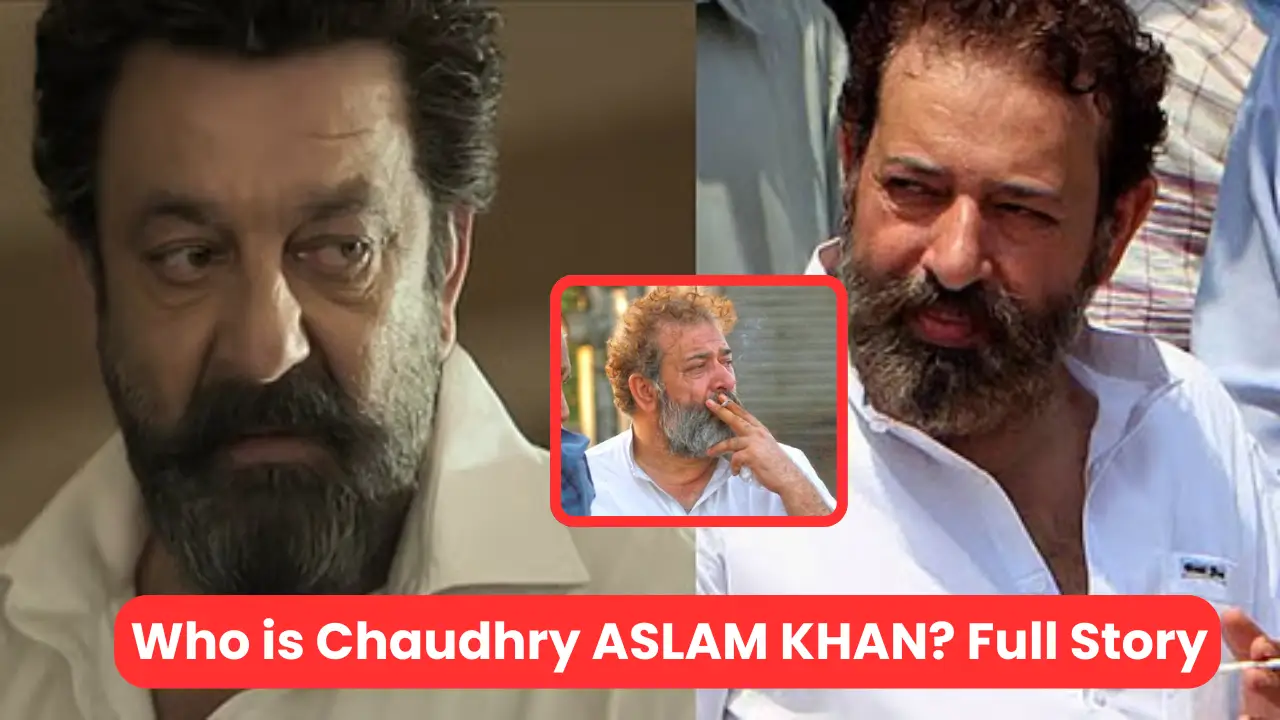
In the chaotic underbelly of Karachi, where gang wars, terrorism, and political vendettas collide, few figures embodied the raw, unfiltered fight against crime like Chaudhry Aslam Khan Swati. Born in the rugged hills of Khyber Pakhtunkhwa, this chain-smoking, battle-hardened police officer rose from the ranks of assistant sub-inspector to Senior Superintendent of Police (SSP), earning the moniker “Pakistan’s Toughest Cop.” Over three decades, Aslam orchestrated hundreds of “encounters”—high-stakes shootouts that neutralized over 100 criminals, from Lyari gangsters to Taliban operatives. Yet, his legacy is as polarizing as the city he policed: hailed as a martyr by some, accused of extrajudicial vigilantism by others. Assassinated in a 2014 suicide bombing, Aslam’s story—recently dramatized in Bollywood’s Dhurandhar with Sanjay Dutt in the lead—mirrors Karachi’s own turbulent soul: a blend of heroism, controversy, and unrelenting defiance.
Biography Table
| Aspect | Details |
|---|---|
| Full Name | Chaudhry Aslam Khan Swati (real name: Mohammad Aslam Khan) |
| Birth | April 10, 1963, Village Council Arghushal, Union Council Dhodial, Mansehra District, KPK, Pakistan |
| Death | January 9, 2014 (aged 50), Lyari Expressway, Karachi (suicide bombing by TTP) |
| Father | Advocate Akram Khan Swati (lawyer from the Swati ethnic group, Arghushal clan) |
| Mother | Not publicly detailed |
| Wife | Noreen (Naureen) Aslam (married 1991; his cousin from villages near Abbottabad) |
| Children | Four: Manahil (daughter), Ikrash (son), Azan (son), Jazil (son); youngest was 12 at time of death |
| Education | Primary education at Dhodial Primary School; graduated from Karachi University (degree unspecified) |
| Police Career | Joined Sindh Police in 1984 as Assistant Sub-Inspector (ASI); rose to SSP; served 1984–2014; encounter specialist (1992–1994, 1996–1997) |
| Notable Operations | Led Lyari Task Force (2004–); arrested Saulat Mirza (1999); killed Rehman Dakait (2009); 2012 Operation Lyari against gangs; anti-TTP raids |
| Awards | Pakistan Police Medal, Quaid-e-Azam Police Medal, Tamgha-e-Imtiaz |
| Controversies | Accused of fake encounters and extrajudicial killings; alleged RAW sponsorship of his assassination (per Kulbhushan Jadhav confession) |
| Net Worth/Legacy | No formal estimate; posthumously honored as martyr; biopic Chaudhry – The Martyr (2022); portrayed by Sanjay Dutt in Dhurandhar (2025) |
Chapter 1: Roots in the Hills – Early Life and Education
Chaudhry Aslam Khan was born on April 10, 1963, in the serene yet austere village of Arghushal in Dhodial, Mansehra District—a Pathan stronghold in the Hazara Division of Khyber Pakhtunkhwa. The son of Advocate Akram Khan Swati, a respected lawyer from the Swati ethnic group’s Arghushal clan, young Aslam grew up in a family steeped in legal and military traditions, which likely instilled in him a sense of justice tempered by the realities of tribal feuds and border tensions.
His early years were marked by academic promise. At Dhodial Primary School, Aslam distinguished himself as an intelligent student, excelling despite the limited resources of rural Pakistan. After primary education, he relocated to Karachi with his father, immersing himself in the city’s bustling chaos. He later graduated from Karachi University, though specifics of his degree remain undocumented—perhaps in law or social sciences, aligning with his father’s profession. It was in Karachi that Aslam adopted the honorific “Chaudhry,” a nod to the Gurjar clans’ reputation for unity and bravery, symbolizing his evolving identity from hill tribesman to urban warrior.
In 1991, Aslam married Noreen Aslam, his cousin from Abbottabad-area villages, forging a bond rooted in familial ties. The couple raised four children—daughters Manahil and sons Ikrash, Azan, and Jazil—in the shadow of Karachi’s dangers, with the youngest just 12 when tragedy struck. Family life offered Aslam rare respite; he was known for mentoring young officers, including sons of slain colleagues, treating them as extensions of his own kin.
Chapter 2: From Streets to Shields – Entry into Policing and Rise
Aslam’s foray into law enforcement began humbly in 1984, when he joined the Sindh Police as an Assistant Sub-Inspector (ASI) in the elite Eagle Squad of the Sindh Reserve Police—a move that thrust him into Karachi’s volatile undercurrents at age 21. Initial postings took him across Karachi’s police stations and even to Balochistan, exposing him to smuggling routes, ethnic clashes, and the nascent rise of militant groups.
By 1991, as Inspector and Station House Officer (SHO) at Kalakot Police Station, Aslam’s reputation solidified. Promoted to SHO at Gulbahar in 1994, he earned his stripes as an “encounter specialist”—a term for officers who neutralized suspects in staged or spontaneous shootouts, bypassing sluggish courts. His 1999 arrest of Saulat Mirza, a notorious hitman for a major political party convicted in the murder of KESC MD Shahid Hamid, catapulted him to DSP in a era rife with target killings.
A brief suspension in the late 1990s for alleged overzealotry tested his resolve, but reinstatement in 2004 marked his resurgence. Tasked with eradicating assassins, Aslam led the Lyari Task Force (LTF), transforming Karachi’s meanest streets into his personal battlefield. By 2010, as head of the CID’s Investigation Wing, he had amassed accolades: the Pakistan Police Medal, Quaid-e-Azam Police Medal, and Tamgha-e-Imtiaz for gallantry.
Chapter 3: Bullets and Ballots – Notable Operations and Encounters
Aslam’s career was a ledger of high-octane triumphs against Karachi’s hydra-headed threats. From 2005 to 2014, he dismantled networks tied to the Muttahida Qaumi Movement (MQM), Tehrik-i-Taliban Pakistan (TTP), Balochistan Liberation Army (BLA), and sectarian outfits like Lashkar-e-Jhangvi (LJ) and Sipah-e-Sahaba Pakistan (SSP).
In the 1992 anti-MQM operations, as SHO in Lyari, he targeted criminal gangs amid ethnic violence. The 2004–2012 Lyari gang wars saw him orchestrate the 2012 “grand operation,” flushing out extortionists and drug lords in a month-long siege. A pinnacle moment: the 2009 “encounter” killing of Rehman Dakait, Lyari’s bandit kingpin, in Steel Town— a Rs. 5 million bounty scalp that quelled a decade of bloodshed but sparked cries of foul play.
Against the TTP, Aslam’s raids yielded arms caches and high-value arrests, including Taliban prisoners from CID cells—actions that placed him atop their hit list. His tally: over 100 neutralized, from target killers to LeT operatives, often in dawn raids or midnight ambushes.
Chapter 4: Shadows of Suspicion – Controversies and Allegations
For every laurel, Aslam faced thorns. Critics branded him a “death squad” leader, accusing him of fake encounters that claimed innocents amid Karachi’s “encounter culture”—a judicial workaround in a witness-intimidated system. Human rights groups decried extrajudicial executions, while political rivals whispered of selective targeting.
Geopolitics amplified the intrigue. In 2017, captured Indian spy Kulbhushan Jadhav alleged in an ISI-released video that Aslam’s 2014 killing was RAW-orchestrated by handler Anil Dhasmana—a claim India dismissed as coerced propaganda. An internal probe later fingered Aslam’s driver as a mole, leaking motorcade routes to terrorists.
Chapter 5: The Final Ambush – Assassination and Immediate Aftermath
On January 9, 2014, Aslam’s nine lives ran out. En route from his Malir home, a TTP suicide bomber rammed his armored vehicle on the Lyari Expressway, detonating 50–100 kg of explosives. The blast killed Aslam, two officers, his guard, and driver, injuring 13 others—including bystanders. TTP’s Mohmand chapter claimed credit, citing Aslam’s Taliban killings; spokesman Sajjad Mohmand gloated over the “top cop’s” demise.
Prime Minister Nawaz Sharif hailed him a martyr, vowing unbroken resolve against terror. MQM leader Altaf Hussain, once a foe, condemned the attack, praising Aslam’s anti-terror grit. Buried in Gizri Graveyard, Aslam left his widow Noreen and children in government care, with promises of education and his son’s future police entry. Noreen later voiced mixed feelings on his Dhurandhar portrayal, balancing pride with the pain of relived loss.
Chapter 6: Echoes in Eternity – Legacy and Cultural Reverberations
A decade on, Aslam’s shadow endures. To admirers, he was Karachi’s “Sultan Rahi”—a cinematic avenger who tamed the untamable. His 2022 biopic Chaudhry – The Martyr, directed by Azeem Sajjad and starring cousin DSP Chaudhry Tariq Islam, captures his reflexes and resolve. In 2025’s Dhurandhar, Sanjay Dutt channels his intensity amid India-Pakistan spy intrigue, spotlighting Aslam’s RAW-TTP crosshairs.
Yet, debates rage: hero or hitman? Aslam’s methods exposed policing’s ethical tightrope in terror-plagued Pakistan. For his family—now safer but scarred—his sacrifice funds scholarships and whispers of pride. In Lyari’s alleys and Mansehra’s hills, Chaudhry Aslam remains a talisman: proof that one man’s grit can briefly light the darkest streets.